

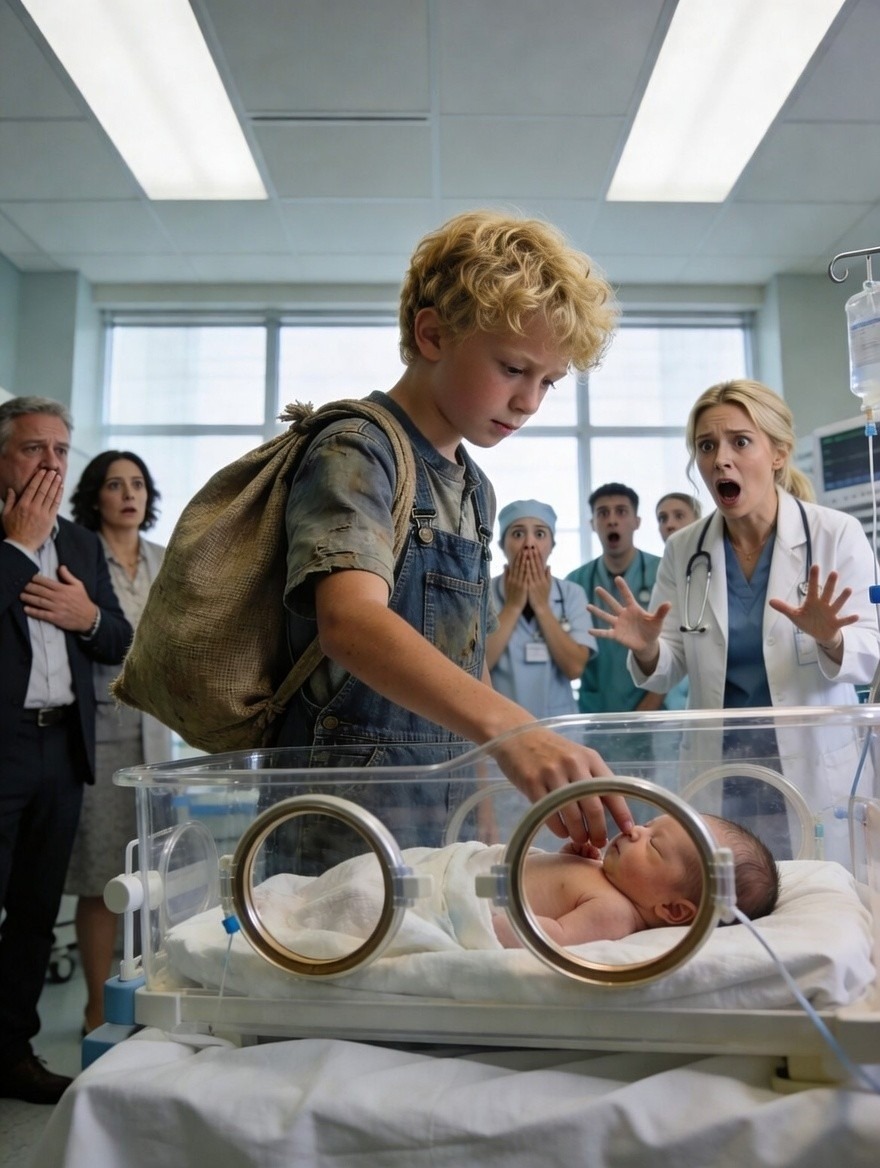
1. He walked in anyway
Security tried to block him. A nurse told him to leave. Leo didn’t argue. He just held up the wallet and said, “I found this. I thought he’d want it back.”
Security tried to block him. A nurse told him to leave. Leo didn’t argue. He just held up the wallet and said, “I found this. I thought he’d want it back.”
2. He looked past the panic
While adults focused on machines, Leo focused on the baby. He’d spent years watching street signs, train schedules, and the tiny cracks in sidewalk concrete. He knew how to spot what didn’t belong.
While adults focused on machines, Leo focused on the baby. He’d spent years watching street signs, train schedules, and the tiny cracks in sidewalk concrete. He knew how to spot what didn’t belong.
3. He spoke up quietly
“His neck looks tight on that side,” Leo said, pointing to the right collarbone. “Like something’s pulling it down.”
“His neck looks tight on that side,” Leo said, pointing to the right collarbone. “Like something’s pulling it down.”
4. Someone finally paused
A tired charge nurse, exhausted from hours of code protocols, actually stopped. She leaned in. She adjusted the overhead light. And she saw it: a nearly invisible thread of medical gauze that had slipped during a previous assessment, wrapped loosely but tightly enough to compress the trachea as the baby shifted.
A tired charge nurse, exhausted from hours of code protocols, actually stopped. She leaned in. She adjusted the overhead light. And she saw it: a nearly invisible thread of medical gauze that had slipped during a previous assessment, wrapped loosely but tightly enough to compress the trachea as the baby shifted.
5. They adjusted, they cleared, they listened
The lead physician repositioned the infant’s head, used fine-tipped forceps, and gently eased the gauze free. Within twelve seconds, the chest rose evenly. Within twenty, the monitor chimed. A steady, beautiful rhythm returned to the room.
The lead physician repositioned the infant’s head, used fine-tipped forceps, and gently eased the gauze free. Within twelve seconds, the chest rose evenly. Within twenty, the monitor chimed. A steady, beautiful rhythm returned to the room.
Why This Story Stays With Us (Lessons & Real-Life Variations)
Stories like this linger because they tap into something deeply human: the gap between what we assume and what’s actually there. Here’s what we can carry forward:
- Fresh eyes solve stale problems. Experts see patterns. Outsiders see anomalies. When you’re stuck, invite someone who doesn’t know the “rules” to look with you.
- Humility saves lives. The doctors didn’t fail because they were incompetent. They failed because they trusted the scan over the skin. Sometimes the bravest medical move is saying, “Let me look again.”
- Observation is a practice, not a talent. Leo wasn’t born with a superpower. He was taught to notice. You can train this: pause before reacting, look for asymmetry, ask “What’s different here?” before accepting the obvious answer.
- Small details carry big weight. A loose thread, a shifted pillow, a slightly crooked frame. In homes, hospitals, and relationships, the tiny things often hold the truth.
Frequently Asked Questions
Continued on next page: