
Step 3: Assemble the Pockets
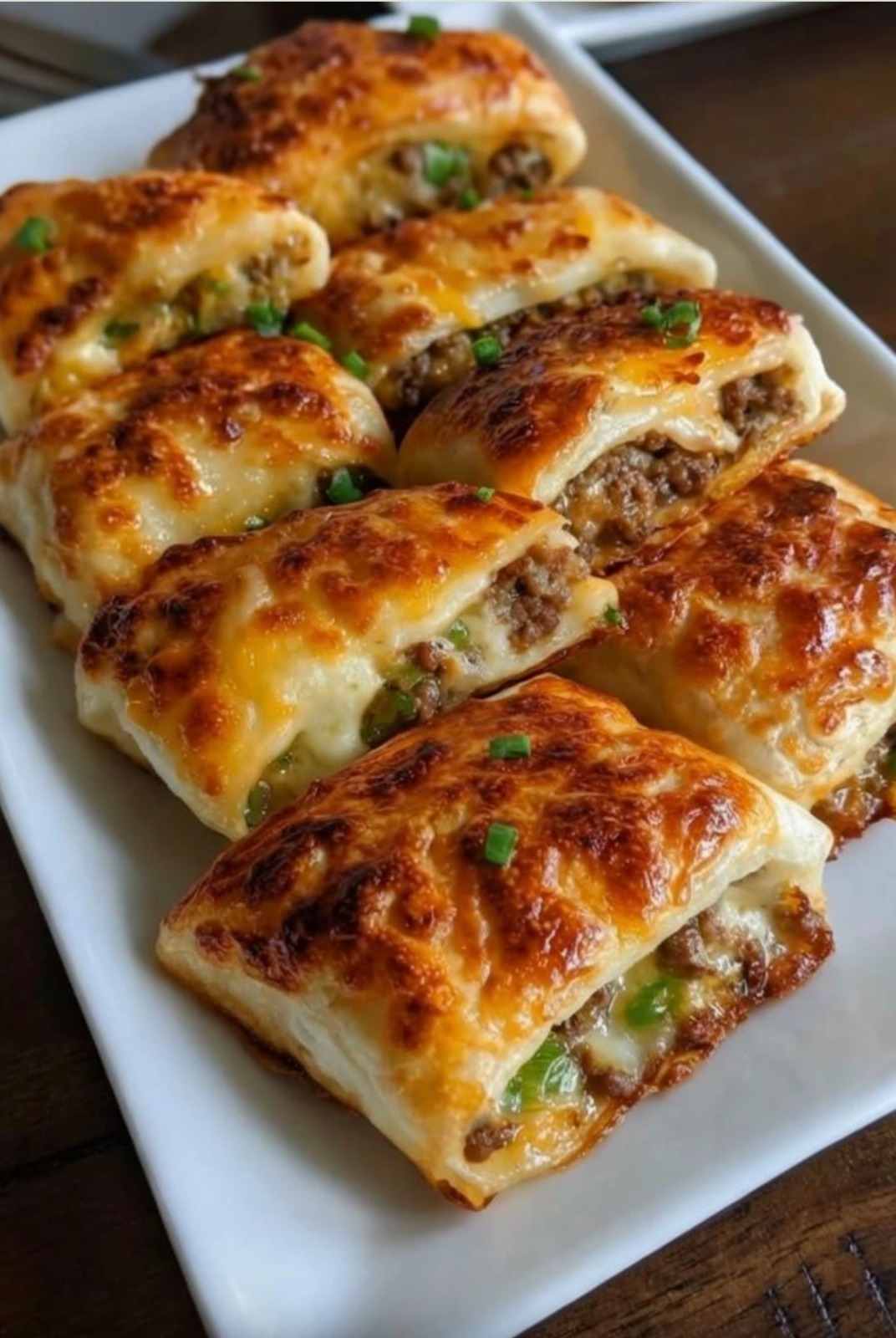
Line a baking sheet with parchment paper or lightly spray with cooking spray. Warm the flour tortillas briefly if needed to make them pliable — 15 to 20 seconds in the microwave wrapped in a damp paper towel works well. Lay a tortilla flat on a clean work surface. Spread a generous spoonful of the cream cheese mixture across the center, leaving about an inch of border around the edges. Spoon a portion of the seasoned ground beef over the cream cheese layer, then top with a handful of shredded cheddar cheese. To fold: bring the bottom edge of the tortilla up over the filling, fold in the sides, then roll upward like a burrito — or fold the tortilla in half over the filling and use a fork to crimp the edges, creating a half-moon pocket shape. Either approach works; the key is to tuck the edges securely so the filling does not escape during baking. Place each assembled pocket seam-side down on the prepared baking sheet. Repeat with the remaining tortillas and filling.
Step 4: Brush and Bake
Using a pastry brush or a spoon, brush the tops and sides of each assembled pocket with the melted butter. This step is not optional — the butter is what gives the finished pockets their golden color, slight crispiness, and the richly satisfying exterior that contrasts so well with the creamy filling. If desired, sprinkle a small amount of additional shredded cheese over the tops before they go into the oven. Bake for 15 minutes, until the tortillas are golden brown and the cheese inside is visibly melted at the edges. Allow to cool for 2 to 3 minutes before serving — the filling will be very hot immediately out of the oven.
Step 5: Add Toppings and Serve
Arrange the baked pockets on a serving platter alongside small bowls of toppings — sour cream, extra salsa, shredded lettuce, diced tomatoes, and guacamole are the most popular accompaniments. Each person can add whatever they like. These are best eaten warm, when the exterior is at its crispiest and the cheese inside is still molten. Set out napkins — they are handheld, but the filling is generous.
Tips for the Best Result
Warming the tortillas before filling prevents cracking when you fold them. Cold flour tortillas are significantly more likely to split at the fold, which causes filling to spill during baking. A quick 15 seconds in the microwave wrapped in a damp paper towel, or 30 seconds in a dry skillet over medium heat, makes them pliable enough to fold without tearing. Do not overfill — the pockets should be generous but not so stuffed that they cannot be folded shut. A tablespoon or two of cream cheese mixture and a similar amount of beef per tortilla is the right proportion; too much filling prevents the edges from sealing properly.
These pockets can be assembled up to 24 hours in advance, covered, and refrigerated before baking. Remove from the refrigerator 15 minutes before baking to take the chill off and ensure even cooking. They can also be frozen before baking — arrange on a baking sheet, freeze until solid, then transfer to a freezer bag and store for up to one month. Bake from frozen at 350°F for approximately 20 to 25 minutes, adding a few extra minutes over the standard time to account for the frozen starting temperature.
Leftovers reheat best in the oven. Place them on a baking sheet at 350°F for about 10 minutes until warmed through — this preserves the crispy exterior. Microwaving works in a pinch but softens the tortilla significantly. Refrigerated leftovers keep well for up to four days in an airtight container.
Why These Work for Any Occasion
The pocket format solves the most persistent practical problem with tacos: structural integrity. Traditional tacos, whether hard-shell or soft, have a tendency to collapse midway through eating, depositing their contents on whatever surface is nearby. Pocket tacos hold everything inside a sealed, baked shell that does not break apart. They are genuinely easy to eat standing up, which makes them practical for game day spreads, potlucks, backyard gatherings, and school lunches that travel well in foil. They scale up without complication — doubling or tripling the recipe requires only additional tortillas, beef, and cheese. And the topping-on-the-side format means that people with different preferences — those who cannot tolerate spice, those who dislike a particular topping, those with dietary restrictions that affect certain garnishes — can all eat the same pockets and customize from a shared spread of accompaniments. It is the kind of recipe that requires almost nothing from the cook but delivers reliably excellent results every time.