
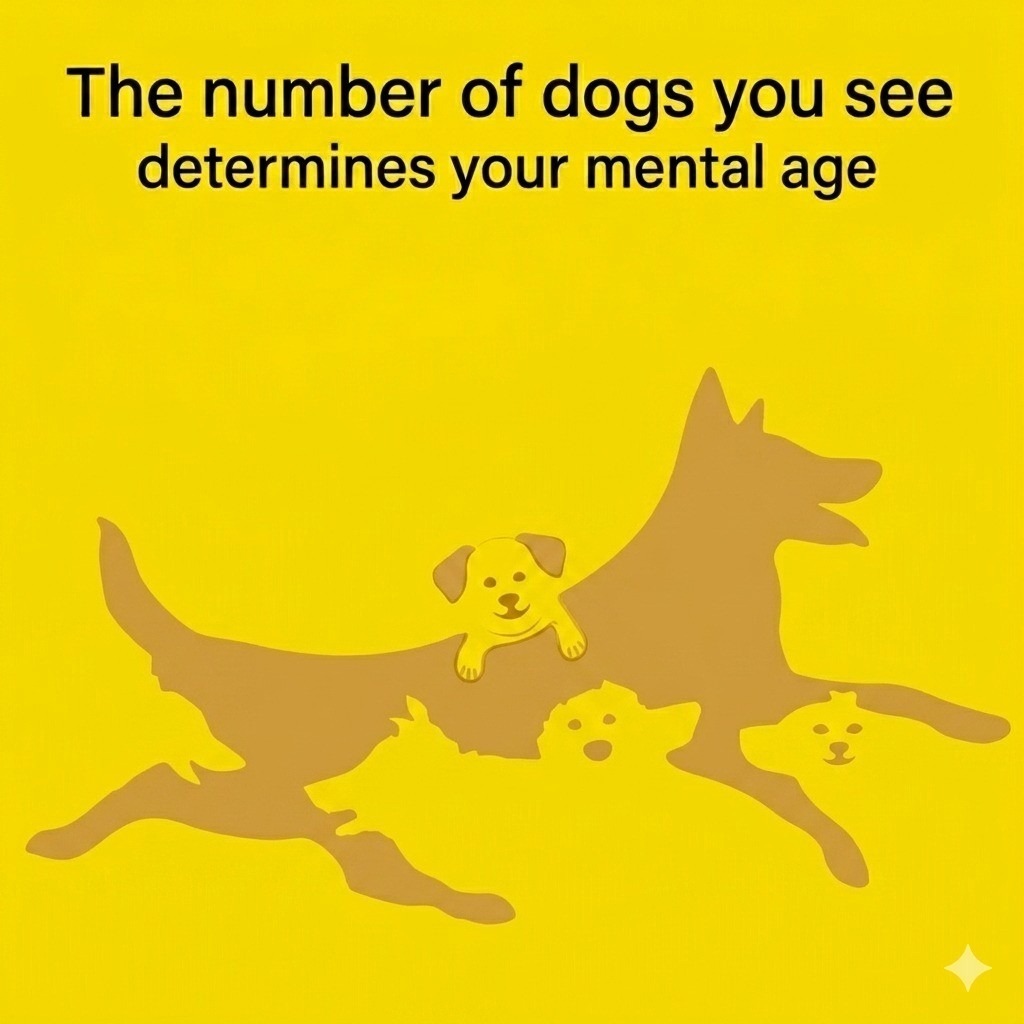
While it’s fun to compare answers, there is no scientific evidence that the number of dogs you see in an image determines your mental age.
Why this claim doesn’t hold up
Mental age is not a simple or single measure. In psychology, it refers to cognitive abilities relative to age groups and is assessed through structured, validated tests—not visual puzzles.
A single image cannot measure:
Intelligence
Emotional maturity
Cognitive development
Personality traits
Real assessments involve:
Multiple tasks and questions
Standardized scoring systems
Careful interpretation by professionals
So while the idea is entertaining, it should not be taken as a real evaluation.
What Your Answer Actually Reflects
Even though the “mental age” claim isn’t accurate, your answer can still tell you something—but it’s about your approach, not your identity.
If you saw fewer dogs
You may have:
Focused on the most obvious shapes
Taken a quick glance rather than analyzing deeply
Preferred a broader, simplified view
If you saw more dogs
You may have:
Spent more time examining details
Looked for hidden patterns
Rechecked the image carefully
But even these observations are not fixed traits. They can change depending on:
Your mood
Your level of focus
How much time you choose to spend on the task
In other words, your answer reflects a moment—not a permanent characteristic.
The Role of Attention and Perception
Two key mental processes are at play when you look at these images:
1. Selective Attention
Your brain chooses what to focus on and what to ignore. This helps you process complex scenes quickly, but it also means you might miss certain details.
2. Visual Interpretation
Your brain interprets shapes based on past experiences and expectations. If something looks like a dog, your brain is quick to label it as one—even if it’s just a pattern.
These processes work together to create your unique perception of the image.
Why These Puzzles Feel So Accurate
Even though the claims aren’t scientific, they often feel convincing. That’s because of a psychological effect known as the Barnum effect.
This occurs when people accept vague or general statements as personally meaningful.
For example:
“You are observant but sometimes overlook small details.”
“You think deeply but can also act quickly when needed.”
Statements like these seem specific, but they apply to almost everyone.
When combined with a personalized result (“You saw 6 dogs, so your mental age is 25”), it creates the illusion of accuracy.
Why Social Media Loves These Challenges
Posts like this are designed to spread quickly—and they do.
They work because they combine: