
Step-by-Step Instructions
Step 1 — Prepare the Ribs
Pat the country-style pork ribs thoroughly dry with paper towels. Check the bone side of each rib for the membrane (a thin, translucent silver skin) and remove it if present by sliding a knife under the edge, gripping it with a paper towel for traction, and pulling it away in one piece. Trim any very large exterior fat deposits, leaving moderate fat coverage. Set the prepared ribs aside.
Step 2 — Layer the Brown Sugar Base
Sprinkle the packed brown sugar evenly across the bottom of a 5- to 6-quart slow cooker insert, distributing it as uniformly as possible so the melting sugar forms a consistent liquid base rather than concentrated patches. This brown sugar layer is the foundation of the glaze — it will begin to melt and combine with the rendered pork fat and the butter within the first hour of cooking.
Step 3 — Add the Ribs and Butter
Arrange the prepared pork ribs in as close to a single layer as the insert allows, fitting them snugly without stacking if possible. Some slight overlap is acceptable for a large batch; the key is that every rib has contact with the brown sugar base below and the butter above. Distribute the sliced butter pieces over the tops of the ribs and tuck a few pieces down between the ribs so the butter melts around all sides of the meat rather than only basting the top surfaces.
Step 4 — Add the Apple Cider Vinegar
Pour the apple cider vinegar evenly over the ribs and butter. It will seem like a small amount of liquid relative to the other ingredients, and at the start of the cook the slow cooker will look relatively dry — this is correct. As the ribs cook, they release significant moisture, the butter melts, and the brown sugar dissolves, all combining with the vinegar to produce the braising liquid that builds the sauce throughout the long cook.
Step 5 — Cook
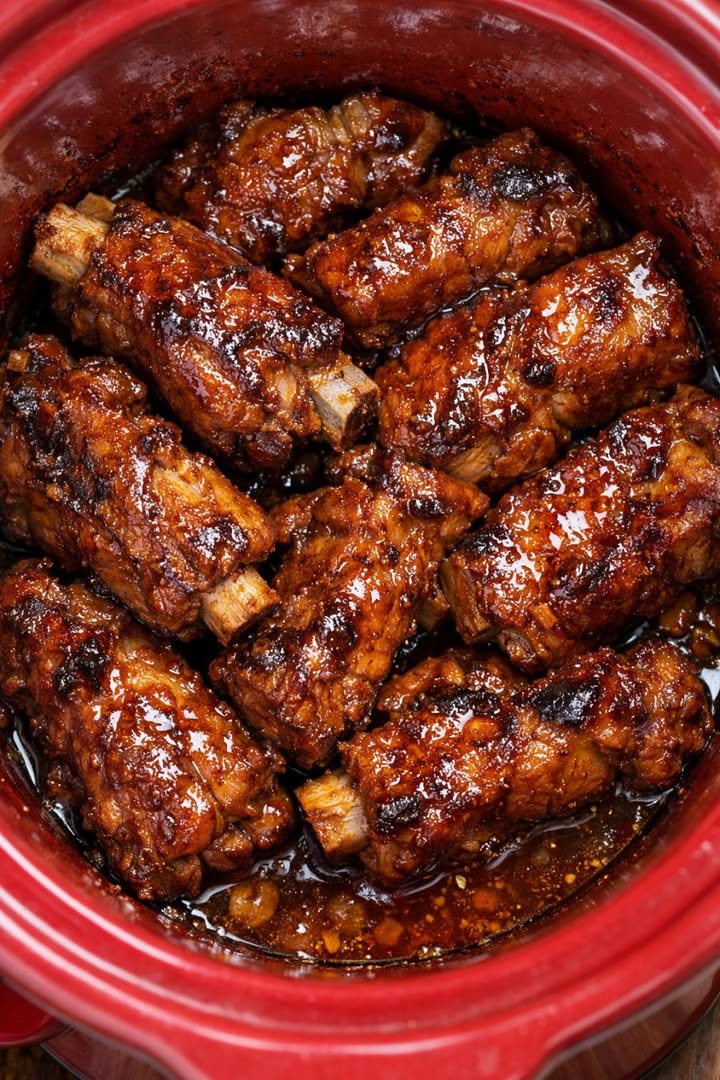
Cover the slow cooker and cook on LOW for 7 to 8 hours or on HIGH for 3½ to 4 hours. LOW is strongly recommended — the extended gentle heat produces more thoroughly tenderized connective tissue, a deeper-colored and more concentrated sauce, and more completely developed caramelized edges around each rib than the faster HIGH setting. The ribs are done when the meat pulls away from the bone with no resistance and a fork slides into the thickest part of the meat as if into softened butter. Avoid lifting the lid during the first 5 hours; each lid opening releases heat and can add 20 to 30 minutes to the cook time.
Step 6 — Optional Broiler Finish
This step is optional but strongly recommended for the most impressive result. Preheat the oven broiler to HIGH and line a rimmed baking sheet with aluminum foil. Carefully transfer the cooked ribs from the slow cooker to the prepared baking sheet using tongs — they will be very tender and may want to fall apart at the edges, which is correct. Spoon or brush the dark brown sugar sauce from the slow cooker generously over the top of each rib. Broil 4 to 6 inches from the heating element for 3 to 5 minutes, watching closely, until the sauce on the ribs darkens further, begins to bubble, and the exposed edges develop a slightly caramelized char. Remove immediately — the sugar in the sauce moves quickly from caramelized to burned under the broiler. Transfer to a serving platter.
Step 7 — Serve
Spoon the remaining sauce from the slow cooker generously over the ribs on the serving platter. The sauce at this point should be a deep amber, glossy, and thick enough to coat a spoon. Serve immediately while hot, with extra sauce in a small pitcher or bowl alongside for anyone who wants more.
Tips for the Best Results
Don’t skip the broiler finish. The slow cooker produces perfectly tender, well-sauced ribs, but the broiler adds the caramelized, sticky, slightly charred exterior that makes them look and taste like they came from a restaurant rather than a weekday home kitchen. Five minutes under the broiler after seven to eight hours of slow cooking is the most effective time investment in the entire recipe.
Cook on LOW for the best texture and sauce. The HIGH setting produces tender ribs, but the LOW setting produces ribs with more thoroughly dissolved connective tissue (meaning a richer, more gelatinous sauce), better caramelization at the edges, and more evenly cooked meat throughout. If the timing allows, LOW for 7 to 8 hours is the correct choice.
Watch the broiler closely. Brown sugar caramelizes fast and crosses from perfectly caramelized to burned in under a minute at broiler temperatures. Stay at the oven for the entire 3 to 5 minutes of the broil, checking every 60 seconds. The visual target is a deepened, bubbling, darkened glaze with slightly charred edges — not blackened.
Spoon the sauce over the ribs before broiling and again before serving. Two generous applications of the sauce — once before the broiler and once when plating — produce a more intensely flavored, more visually glossy finished rib than a single application. The sauce from the slow cooker is the best part of the dish and should be used generously.
Let the sauce settle before skimming. The sauce in the slow cooker after the ribs are removed will have a layer of rendered pork fat floating on the surface. A brief rest of five minutes allows this fat to pool at the top where it can be skimmed with a large spoon, producing a cleaner, richer sauce for serving. This step makes a noticeable difference in the sauce’s quality and is worth the short wait.
Frequently Asked Questions
What exactly are country-style pork ribs?
Country-style ribs are a cut from the blade end of the pork loin or from the shoulder, rather than from the rib cage where baby back and spare ribs originate. They’re the meatiest pork rib cut — more meat, less bone — and they’re sold both bone-in and boneless. The bone-in version is more flavorful from the marrow; the boneless version is easier to serve. Both work well in this recipe. They’re one of the most economical and versatile cuts in the pork case and are ideal for slow cooking because their fat content and collagen produce a richly flavored, self-basting result over the long braise.
Can I use boneless country-style ribs?
Yes. Boneless country-style ribs are typically cut from the pork shoulder and are fattier and more richly flavored than the bone-in loin-cut variety. They produce an equally excellent result in the slow cooker with the same method and timing. They’re also easier to serve and eat, which makes them a good choice for a family gathering where ease of eating matters.
Can I use this same sauce on baby back ribs?
Yes. Baby back ribs braised in the same brown sugar, butter, and apple cider vinegar combination produce an outstanding result. Baby back ribs are leaner than country-style ribs and cook somewhat faster — check for tenderness at 5 to 6 hours on LOW rather than 7 to 8. The broiler finish is particularly recommended for baby back ribs, where the caramelized glaze over the rib surface is a classic visual presentation.
Can I add a dry rub before slow cooking?
Yes — and it’s an excellent optional addition that adds significant depth without compromising the four-ingredient simplicity of the sauce. A simple combination of salt, black pepper, garlic powder, smoked paprika, and onion powder rubbed over the ribs before they go into the slow cooker adds a savory, smoky spice layer under the sweet glaze that makes the finished ribs more complex and interesting. This technically increases the ingredient count beyond four but uses only common pantry spices.
How do I reheat leftover ribs?
The best method is low and slow in the oven: arrange the leftover ribs in a covered baking dish with several spoonfuls of the reserved sauce, and heat at 300°F for 20 to 25 minutes until warmed through. The covered dish keeps the moisture in and prevents the sauce from burning. A stovetop option works well too — place the ribs in a skillet with the sauce over medium-low heat, covered, for 10 to 15 minutes, turning once. The microwave works in a pinch but can dry out the exterior; cover with a damp paper towel and use medium power rather than full power.
Variations Worth Trying
Spicy brown sugar version: Stir one teaspoon of crushed red pepper flakes or half a teaspoon of cayenne into the brown sugar before spreading it on the slow cooker bottom. The heat builds through the long cook and produces a finished sauce with a sweet-heat character — the brown sugar’s sweetness and the pepper’s slow-building heat complement each other in the way that makes classic sweet-and-spicy barbecue sauces so effective. A pinch of smoked paprika alongside the cayenne adds a smoky dimension.
Garlic and herb version: Add four whole garlic cloves (peeled and lightly crushed) and two sprigs of fresh thyme or rosemary to the slow cooker with the ribs. The garlic mellows and sweetens over the long braise, adding a savory depth beneath the sweet glaze; the thyme or rosemary contributes an herbal, slightly piney note that grounds the sweetness. Remove the herb sprigs before serving.
Bourbon brown sugar version: Replace two tablespoons of the apple cider vinegar with two tablespoons of bourbon. The bourbon adds vanilla, caramel, and oak complexity to the sauce that deepens it toward a genuine barbecue glaze character. The alcohol cooks off completely during the long braise, leaving only the flavor compounds behind. This version is particularly good with the broiler finish, where the bourbon’s sugar caramelizes alongside the brown sugar to produce an exceptionally glossy, complex glaze.
Dijon and brown sugar version: Add one tablespoon of Dijon mustard to the apple cider vinegar before pouring it over the ribs. The mustard adds a sharp, tangy complexity that gives the sauce a slightly more sophisticated character and makes it taste more deliberately constructed. This version is particularly good on the bone-in cut where the richness of the marrow-infused sauce benefits from the mustard’s sharpness.
Pineapple and brown sugar version: Add half a cup of pineapple juice to the slow cooker alongside the apple cider vinegar and reduce the brown sugar to three-quarters of a cup. The pineapple juice adds tropical fruitiness and additional acidity that lightens the sauce’s character and gives it a Hawaiian-influenced sweet-tangy quality that’s particularly popular with children. The pineapple’s natural tenderizing enzymes (bromelain) also contribute to the meat’s texture over the long braise.
Serving Suggestions
The dark amber brown sugar and butter sauce that the slow cooker produces is the most valuable element of this dish and everything alongside it should be chosen to carry it well. Creamy mashed potatoes are the ideal companion — smooth, buttery, and neutral enough to allow the sweet-tangy glaze to be the dominant flavor on each forkful. Buttered egg noodles work similarly, with the noodles absorbing the sauce beautifully when it’s spooned over. For a more rustic, farmhouse-style presentation, serve alongside warm cornbread (which absorbs the sauce at the edges beautifully) and a bowl of baked beans that doubles as a second sweet-savory element on the plate. Green beans, coleslaw, or steamed broccoli provide the fresh, slightly sharp vegetable contrast that keeps the richness of the ribs and sauce in check. For a summer gathering or backyard cookout where the ribs are served as the centerpiece, add corn on the cob, a simple cucumber salad, and cold lemonade alongside.
Storage
Store leftover ribs in the sauce in an airtight container in the refrigerator for up to 4 days. The sauce gels when cold as the gelatin from the pork bones sets — this is a sign of a properly made, collagen-rich braising liquid rather than any defect. Reheat as described in the FAQ section above, with a few spoonfuls of the reserved sauce to keep the meat moist during reheating. Leftover rib meat pulled from the bone and mixed with some of the sauce makes an excellent filling for sandwiches on toasted rolls, roughly similar to a pulled pork sandwich — one of the better uses for any leftover braised pork available.
Four Ingredients, One Standout Dinner
Slow Cooker Amish Country Ribs delivers a result that consistently outperforms what four pantry ingredients and a slow cooker seem like they should be capable of producing. The brown sugar, butter, and apple cider vinegar combination builds a sauce with the kind of sweet-tangy-rich depth that takes considerably more ingredients to achieve in most recipes, and the long gentle braise produces pork that is genuinely fall-off-the-bone tender in the way that only sustained low heat can accomplish. The optional broiler finish is the last step that turns a good weeknight dinner into something that people ask about and remember. All four of those outcomes — simple ingredients, excellent sauce, tender pork, memorable presentation — from one slow cooker and less than ten minutes of morning preparation. That’s a recipe worth keeping.