
Slow Cooker Amish Country Ribs
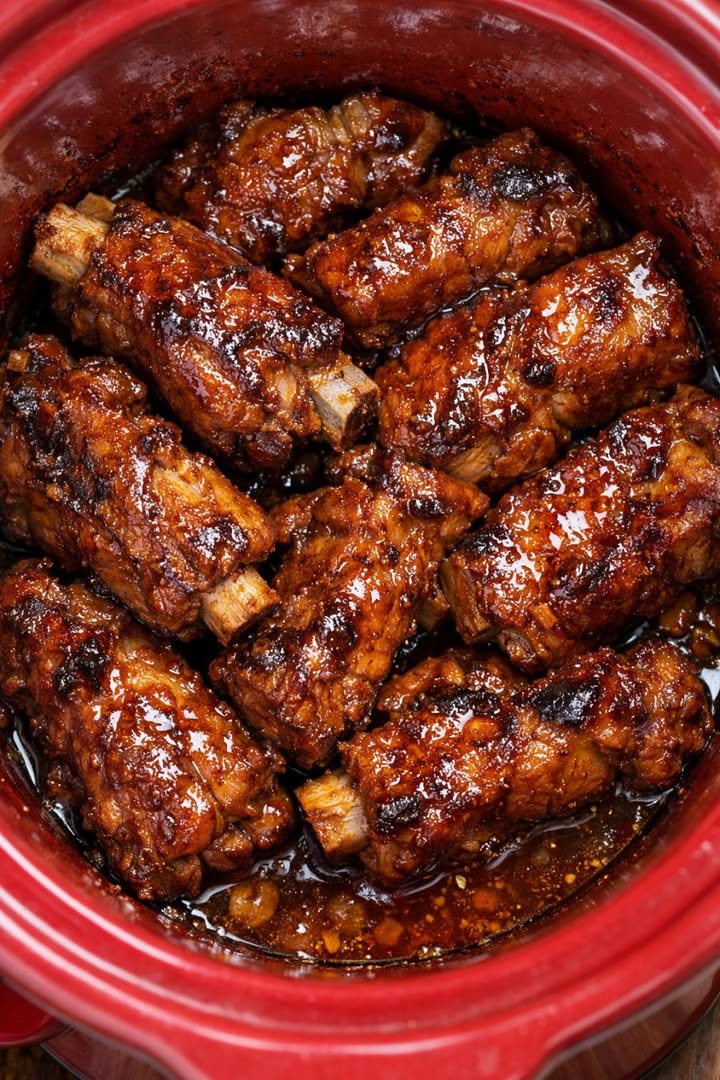
Country-style pork ribs braised low and slow in a combination of brown sugar, butter, and apple cider vinegar is the kind of cooking that doesn’t require explanation once you taste the result. These are not baby back ribs or spare ribs — country-style ribs are the meatiest, most substantial cut in the pork rib category, cut from the blade end of the pork loin and containing a generous ratio of meat to bone. Put them in a slow cooker over a base of brown sugar, scatter butter over the top, pour in the apple cider vinegar, and leave them for seven to eight hours on LOW. What you get is pork that pulls from the bone with no resistance, surrounded by a glossy, dark amber sauce that has the sweet-tangy-rich character of a proper glaze — built from nothing more than those four pantry ingredients working together over the long, gentle braise.
The Amish-country connection here is the cooking philosophy rather than any particular recipe: the use of simple, practical pantry ingredients combined with patience and low heat to produce results that could seem to require more technique and effort than they actually do. Brown sugar, butter, and vinegar have been building sauces in farmhouse kitchens for generations because they work reliably and well, producing a sweet-sour-rich balance that flatters pork better than almost any more complicated sauce combination.
How Four Ingredients Become One Exceptional Sauce
The mechanism that turns brown sugar, butter, and apple cider vinegar into a genuinely impressive sauce is worth understanding, because it explains both why this recipe works and why the proportions matter. Brown sugar provides the primary sweetness and, critically, the molasses that gives the finished sauce its deep amber color and caramel-adjacent complexity — white sugar would produce a similar structure but a flatter, less interesting flavor. As the slow cooker heats, the brown sugar melts into the pork’s rendered fat and the butter, combining with the moisture released by the ribs to form a concentrated, darkening braising liquid.
The apple cider vinegar’s role is the essential counterweight. Without acid, brown sugar and butter over pork produces something pleasant but cloying — sweet and rich without the contrast that makes sweetness interesting. The vinegar’s acidity cuts through both the fat and the sugar, sharpening and brightening the sauce and providing the tangy note that makes each bite compelling rather than merely rich. Apple cider vinegar specifically contributes a mild fruitiness alongside its acidity that pairs particularly well with pork, and it’s the choice that gives the sauce its Amish farmhouse character. The butter rounds everything out with dairy richness that makes the sauce feel unified and glossy rather than sharp or thin. After seven to eight hours, the result is a sauce that tastes like it involved considerably more than three supplementary ingredients.
About Country-Style Pork Ribs
Country-style pork ribs are the most misunderstood item in the pork rib category because they’re neither technically ribs (they don’t come from the rib cage) nor a single consistent cut. They’re typically cut from two areas: the blade end of the pork loin (the most common variety, attached to or near the shoulder blade, with a mix of light and dark meat) or from the pork shoulder itself (a fully bone-in or boneless cut with darker, fattier meat). Both are sold as “country-style ribs,” and both are excellent for slow cooking — the shoulder-cut version is fattier and produces a richer sauce; the loin-cut version is leaner and more refined but equally tender after the long slow braise.
Country-style ribs are sold both bone-in and boneless. Bone-in varieties have more flavor from the marrow and connective tissue dissolving into the braising liquid during the long cook; boneless are easier to serve and eat, particularly for children. Either works well in this recipe with the same method and timing. At three to four pounds, you’re feeding four to six people generously — the bone-in cut will weigh more than the boneless for equivalent servings, so adjust accordingly when purchasing.
Why You’ll Love This Recipe
Four ingredients placed in a slow cooker in the morning produce fall-off-the-bone pork ribs in a glossy, caramelized brown sugar glaze by dinnertime, with less than ten minutes of actual preparation. The optional broiler finish in the last step is strongly recommended and adds five minutes to the total process — it produces the slightly caramelized, sticky edges on the ribs that make them look and taste like proper barbecue-house ribs rather than slow-cooker ribs. The dish is equally at home at a relaxed weeknight family dinner or at a casual gathering where low-effort, crowd-pleasing food is the goal.
Ingredient Notes
Bone-in country-style pork ribs — 3 to 4 pounds — are the protein. Pat them dry with paper towels before adding them to the slow cooker; surface moisture on the ribs dilutes the brown sugar base at the beginning of the cook and slows the formation of the concentrated glaze. Trimming very thick, external fat deposits is worthwhile — large fat pockets render into the sauce and can make it greasy if there’s an excess; the modest fat marbling throughout the meat is desirable and contributes to the sauce’s richness without overwhelming it. If your ribs have the membrane on the bone side (a thin, tough silver skin), peel it off before cooking — it doesn’t soften adequately during the braise and creates a chewy layer against the bone.
Brown sugar — 1 cup, packed — goes into the bottom of the slow cooker before the ribs, creating the base of the glaze. Packed dark brown sugar produces a more deeply flavored, more molasses-forward sauce than light brown sugar; either works well, with dark brown being the stronger choice for anyone who wants a more robust, complex result. The sugar melts into the pork’s rendered fat and the melting butter during the first hour of the cook, beginning to form the braising liquid. Do not substitute granulated white sugar — the molasses in brown sugar is a significant flavor contributor to the finished sauce.
Unsalted butter — half a cup (one stick), sliced into tablespoon-sized pieces — provides the fat and dairy richness that rounds the sauce into something cohesive rather than merely sweet and sharp. Slicing the butter into pieces and distributing them over and between the ribs ensures even melting throughout the insert rather than a puddle of butter in one area. Salted butter can be substituted and adds a modest seasoning note, though the ribs themselves benefit from a light hand with additional salt at the end rather than building it in through the butter.
Apple cider vinegar — one-third cup — is the acid that balances the sweetness of the brown sugar and cuts through the richness of the butter and pork fat. One-third cup sounds like a modest amount relative to the sugar and butter, and it is — but it’s exactly calibrated to provide brightness and balance without making the sauce noticeably tart in the finished result. Apple cider vinegar’s mild fruitiness is the right choice over white vinegar (which produces a sharper, less complex result) or balsamic (too sweet and thick for this application). Don’t reduce the amount to make the sauce sweeter — the balance depends on all three primary sauce components being present in their specified quantities.
Ingredients
3 to 4 lbs bone-in country-style pork ribs
1 cup packed brown sugar (dark or light)
½ cup (1 stick) unsalted butter, sliced into pieces
⅓ cup apple cider vinegar
see continuation on next page