
Paragraph 3
Chop the shrimp into bite-sized pieces. If using scallops or calamari, make sure they’re chopped into similar-sized pieces so every bite has a balanced taste and texture.
Paragraph 4
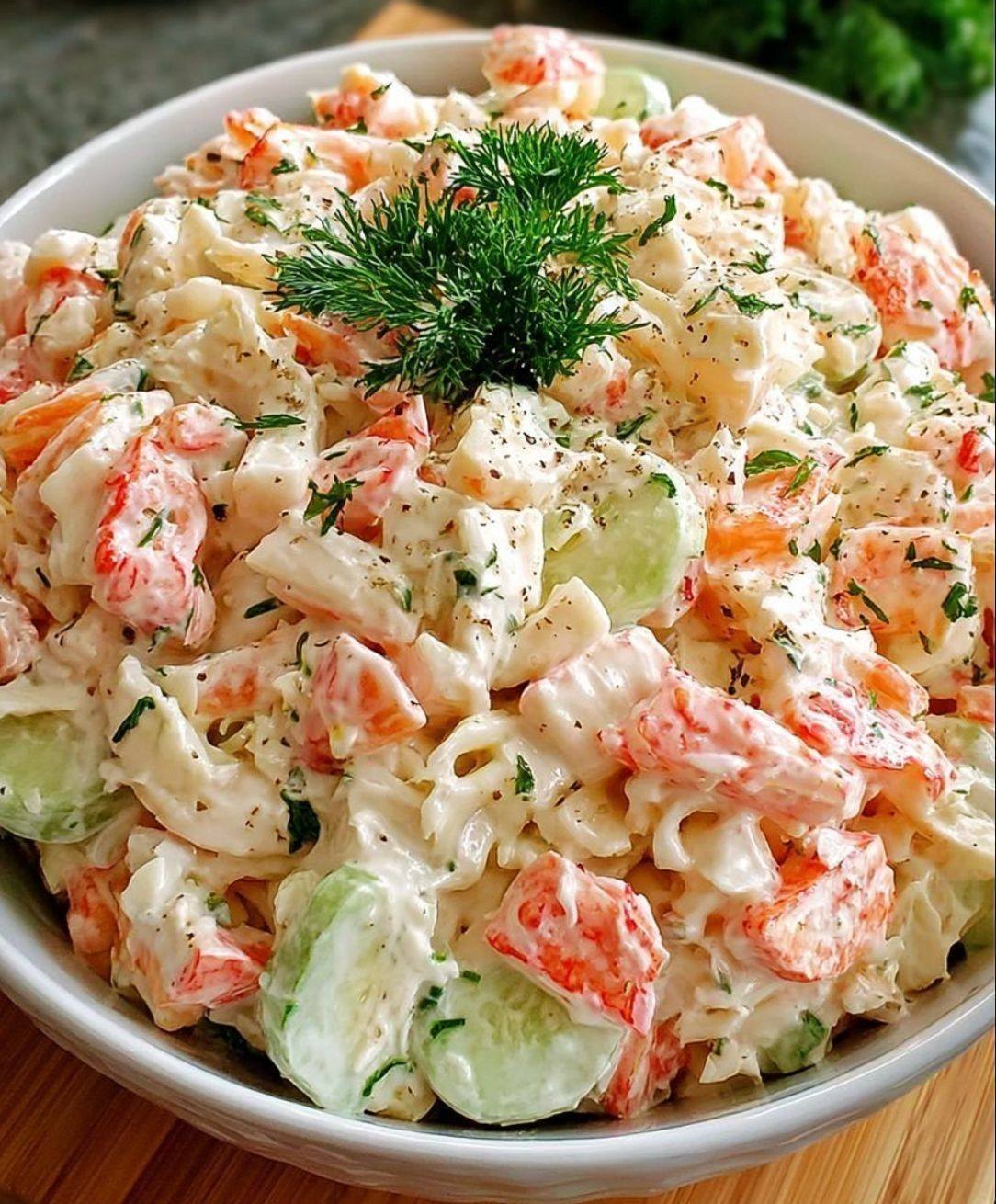
Transfer all seafood to a large mixing bowl. This gives you plenty of space to fold in the other ingredients without crushing the delicate crab meat.
Paragraph 5
Add the chopped celery, red onion, cucumber, and bell pepper. These crunchy vegetables add bulk without adding many carbs—perfect for a diabetic diet.
Paragraph 6
Fold in the chopped parsley or dill for fresh, herbal brightness. Fresh herbs are an underrated way to add flavor naturally without extra calories or sodium.
Paragraph 7
If using avocado, add it last. It provides healthy fats that support blood sugar control and satiety, making the salad more satisfying.
Make the Dressing
Paragraph 8
In a medium bowl, whisk together the light mayonnaise and Greek yogurt. This combination keeps the dressing creamy while lowering saturated fat and calories compared to traditional mayo-only seafood salads.
Paragraph 9
Add the Dijon mustard, lemon juice, and apple cider vinegar. These acidic components brighten the dish and help balance the natural sweetness of the seafood.
Paragraph 10
Whisk in the garlic powder, onion powder, paprika, salt, and black pepper. Adjust seasoning to taste. If you prefer a little heat, add a pinch of cayenne or chili flakes.
Paragraph 11
Whisk until smooth. A lump-free dressing ensures consistent flavor throughout the salad instead of pockets of seasoning.
Combine the Salad
Paragraph 12
Pour the dressing over the seafood and vegetables. Use a silicone spatula or wooden spoon to gently fold everything together, being careful not to break apart the crab meat.
see continuation on next page