

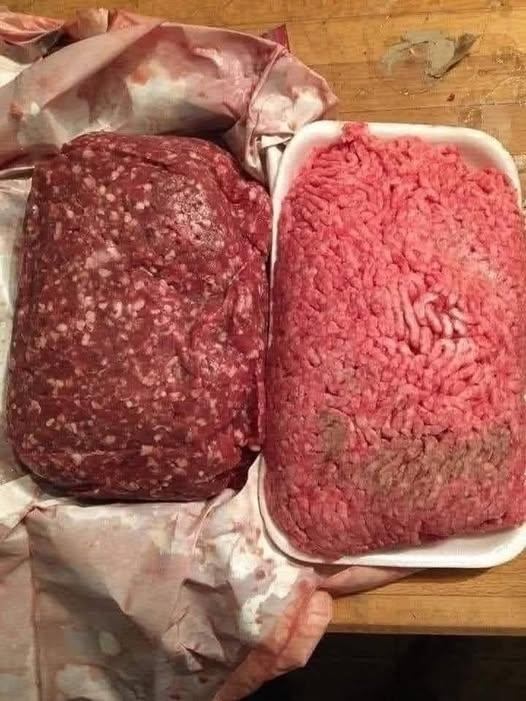
For generations, supermarkets have built their reputations on a single, unspoken promise: trust. Shoppers trust that the label matches the contents, that the price reflects the quality, and that the food they bring home is safe for their families. But lately, that trust has started to fray—not because of one explosive scandal, but because of a slow, unsettling pattern that’s become impossible to ignore.
It began subtly. The texture of packaged meats felt… off. Not spoiled, just inconsistent. One week, a steak was tender and flavorful; the next, it was watery and tough. Chicken breasts released an unusual amount of liquid in the pan. Ground beef browned unevenly or gave off a strange smell. Longtime home cooks couldn’t quite explain it, but they knew something wasn’t right.
At first, people shrugged it off. Maybe it was a bad batch. Maybe the delivery was delayed. Maybe cold transport affected the texture. Packages were returned, swapped, or tossed—but no alarms were raised.
Then the stories multiplied.
Online forums lit up with similar complaints. Local Facebook groups shared warnings. Food bloggers posted side-by-side comparisons of meat bought weeks apart. The pattern was too widespread to ignore.
What finally broke the silence was a small, independent food-testing group that decided to investigate. They expected to find minor issues—maybe poor handling or storage. What they uncovered was far more troubling.
Some meat distributors—not the grocery stores themselves, but the companies supplying them—had quietly begun blending lower-grade imported meat with higher-quality domestic cuts. In some cases, the meat came from facilities with little oversight. In others, it was simply a cheaper grade repackaged without disclosure.
This wasn’t a safety issue. The meat wasn’t contaminated. But it was mislabeled, misrepresented, and sold at premium prices that it didn’t deserve.
The packaging looked the same. The labels were clean. The logos were familiar. The prices hadn’t changed. But the product inside had. And most shoppers would never have known—if not for the taste and texture giving it away.
When the findings went public, food safety experts didn’t sound alarms about pathogens. They raised concerns about transparency. For years, consumers have struggled to decode labels like “natural,” “enhanced,” or “processed in.” Now even straightforward labels were suspect.
As one expert put it: “The problem isn’t the meat. The problem is the lie.”
Supermarkets rushed to distance themselves. They claimed ignorance, pointing to third-party certifications and audits. And technically, they were right—grocery chains don’t process the meat. They’re the final stop in a long, tangled supply chain.
But customers didn’t care about technicalities. They cared that the steak they bought wasn’t what they paid for. That the chicken tasted like preservatives. That the brands they trusted didn’t notice—or didn’t look closely enough.
One mother, interviewed outside a store, said it plainly: