
Step 6: Roll Out the Flatbreads
Working with one ball at a time and keeping the remaining balls covered, roll each piece of dough on the lightly floured surface into a round disc approximately 6 to 7 inches in diameter and about a quarter inch thick. Do not roll the discs too thin — the thickness is part of what makes bazlama so distinctively fluffy, and a disc that is rolled too thin will not develop the same pillowy interior. If the dough springs back when you try to roll it, allow it to rest for another 2 to 3 minutes and try again. Repeat with the remaining balls, keeping the rolled discs covered with a towel while you work through the batch.
Step 7: Cook in the Pan
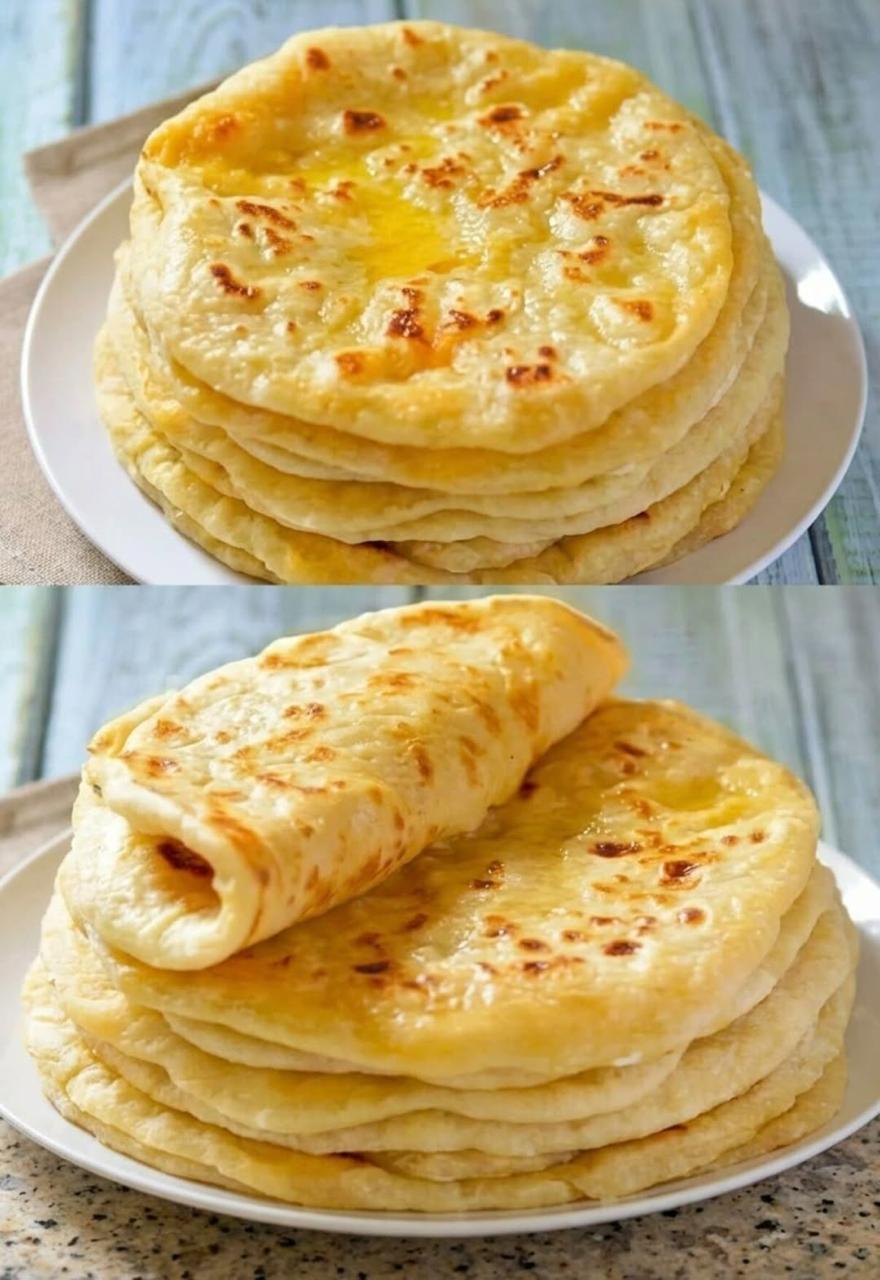
Heat a cast iron skillet or heavy non-stick pan over medium heat for 2 to 3 minutes before adding the first flatbread — the pan should be properly preheated but not smoking. A cast iron skillet is the best choice for bazlama because it retains and distributes heat very evenly, producing consistent browning across the entire surface of each flatbread. Brush the pan very lightly with olive oil or leave it dry, depending on your preference. Place one rolled disc in the pan and cook for approximately 2 to 3 minutes on the first side. As it cooks, you will see small bubbles begin to form across the surface of the dough — this is the yeast continuing to produce gas as it is exposed to heat, and it is a very satisfying thing to watch. After 2 to 3 minutes, the underside should be golden and marked with lightly darker spots. Flip the flatbread and cook the second side for another 2 to 3 minutes. If all goes well — and it almost always does — the bread will puff dramatically during the second side, inflating into a beautiful pillow as steam builds up inside. This puffing is the hallmark of a properly made bazlama and the moment that makes everyone in the kitchen stop what they are doing to look.
Step 8: Finish and Serve
Remove the cooked flatbread from the pan and immediately brush the top generously with melted butter or olive oil. Scatter a small handful of finely chopped fresh parsley over the surface and add a pinch of red chili flakes if you like a little heat. Stack the finished flatbreads on top of each other and cover them with a clean kitchen towel while you cook the remaining pieces — the steam trapped in the stack keeps all the bread warm, soft, and pliable. Bazlama is at its very best served warm, within the first 20 to 30 minutes of cooking, though it remains good at room temperature for several hours and makes excellent toast or wraps the following day.
What to Serve with Bazlama
Bazlama is one of the most versatile breads available to a home cook. For breakfast in the Turkish tradition, serve it warm with white cheese, sliced tomatoes and cucumber, olives, and honey — the combination of savory and sweet flavors that makes Turkish breakfast one of the great morning meals in the world. For a simple lunch or snack, brush it generously with garlic butter while it is still hot from the pan and eat it immediately. For a more substantial meal, use it as a wrap for grilled meats — chicken, lamb kofta, beef kebab — with sliced vegetables and a drizzle of yogurt sauce or tahini. It is outstanding alongside soups and stews of all kinds, serving as the vehicle for soaking up every last drop of broth. It can replace pita for hummus and other dips, and it is excellent alongside any Middle Eastern or Mediterranean dish. Bazlama also pairs beautifully with Turkish cacik — the yogurt, cucumber, and herb dip that is one of the essential condiments of Turkish cuisine.
Storage and Reheating
Bazlama is best on the day it is made, and ideally in the first hour after cooking. It stays soft at room temperature for up to two days when stored in an airtight container or wrapped tightly in plastic wrap. For longer storage, allow the flatbreads to cool completely, wrap them individually, and freeze for up to three months. To reheat from room temperature, place in a dry non-stick pan over medium-low heat for about 30 seconds per side — this restores the fresh-cooked texture and warmth far more effectively than a microwave. From frozen, thaw at room temperature for an hour and then reheat in the pan, or heat directly from frozen in a covered pan over low heat for 2 to 3 minutes per side. The reheated bread is genuinely good — not quite the same as fresh from the pan, but close enough to be worth making a large batch specifically to have on hand throughout the week.